Undress Ai: how to undress someone in a photo using a neural network. Learn how to generate an undress video through a neural network and undress a person online. Use the undress app to undress a girl or person quickly and with high quality and create an undress ai video.
In English, the word undress means "to undress" and carries no additional meanings. However, starting around 2023-2025, this neutral verb became a marker of a technological phenomenon — Undress Ai, or so-called nudify services. It was they that sparked a wave of discussions about how quickly generative AI tools capable of altering people's images are developing.
It was in this environment that queries like "make undress video", "how does the neural network undress ai undress a girl" or "undress a girl in a video using the neural network undress" etc. began to appear. Such formulations reflect rather a growing interest in the capabilities of generative AI capable of undressing anyone in a photo.
The trend is developing: analytical services note that people are increasingly searching for ways to generate undressing a person through an undress app or with the help of various bots.
Why did this become a popular topic at all? First of all, because the technology has dramatically simplified. If just a few years ago deepfake was considered entertainment for specialists, today it's enough to upload a photo to one of such services — and within a few seconds a synthetic imitation of nudity appears.
Undress Ai stands out among deepfake tools as a separate category, spreading especially quickly. More than 90% of all deepfake videos are sexualizing materials, and the vast majority of such images are directed specifically at women.
How the trend "undress by photo using Undress Ai" is developing
Initially, the word undress had nothing to do with digital technologies. It was used exclusively in a literal, everyday sense:
to undress — to undress oneself or to undress someone;
in a state of undress — to be in a state of partial or complete nudity.
Until the 2020s, the word was found mainly in colloquial speech, literature, or descriptions of everyday situations. However, with the growth of generative technologies, it unexpectedly received a new "digital life".
On the wave of interest in neural networks and automatic image processing, the term undress began to be used as a name for services offering visual transformations. The verb began to be used in naming applications that create an "undressing" or "clothing change" effect on photos. Over time, the term began to be used in a technological sense as well — from describing an action in reality to denoting a digital function based on AI.
Today, Undress Ai is a collective name for a group of tools that use generative algorithms to transform images of people. The main focus is on services that:
Undress a person in a photo, creating an imitation of nudity;
Replace clothing with more revealing ones;
Draw body parts that were not in the original image.
The logic of how such tools work is as follows: the image is passed through a generative model that creates a synthetic image based on data obtained during training.
It is important to note the key features of the technology that allows generating undressing of a person:
This is a variant of deepfake technologies
Undress Ai belongs to the direction of synthetic explicit content — content created entirely or partially by artificial intelligence. Such images may look realistic visually, but they do not reflect a person's real body, being the result of algorithmic substitution.
This is not "honest photo processing"
Despite the external similarity to retouching tools, Undress Ai works differently. It's not a filter and not a photoshop edit. The model draws over image areas, creating elements that didn't exist in the photo. That's exactly why such services are classified as deepfake category, not as quality improvement tools.
Such functions can be used in a light, playful way:
As a joke;
As an experiment;
As adult-fun;
As a "harmless" transformation effect.
However, research shows that deepfake tools can be used to create images of a person without their consent. In a professional environment, this is classified as a form of image-based abuse — abuse through visual content. One should be more careful with this.
How images of an undressed person are generated through a neural network from a photo
If explained in the simplest terms, Undress Ai is a type of generative models that draw over what is not in the original photo. Services use architectures like GAN or diffusion models trained on huge datasets of images of human bodies, underwear, and nudity.
The mechanics look like this:
The model "reads" the person's silhouette, body contours, clothing texture;
Assumes what the image area "under the fabric" might look like;
Then it generates a new layer of pixels, replacing part of the original image with a synthetic image.
Essentially, the result is not a "revelation of the hidden", it's a fully synthetic reconstruction created by statistical patterns from training data. Nevertheless, visual realism can be high: according to statistics, one can see that users often perceive such images as real, which leads to emotional and social consequences both for viewers and for people depicted in the photo.
Thus, the technology does not "reveal" a person's body — it creates its digital version based on probabilistic assumptions of the neural network.
How to undress a person in a photo using Undress Ai
One of the reasons for the rapid spread of Undress Ai is the dramatic simplification of generative tools. Where 3D graphics or photomontage skills were previously required, it's now enough to perform a few simple actions to generate undressing a person through an undress app:
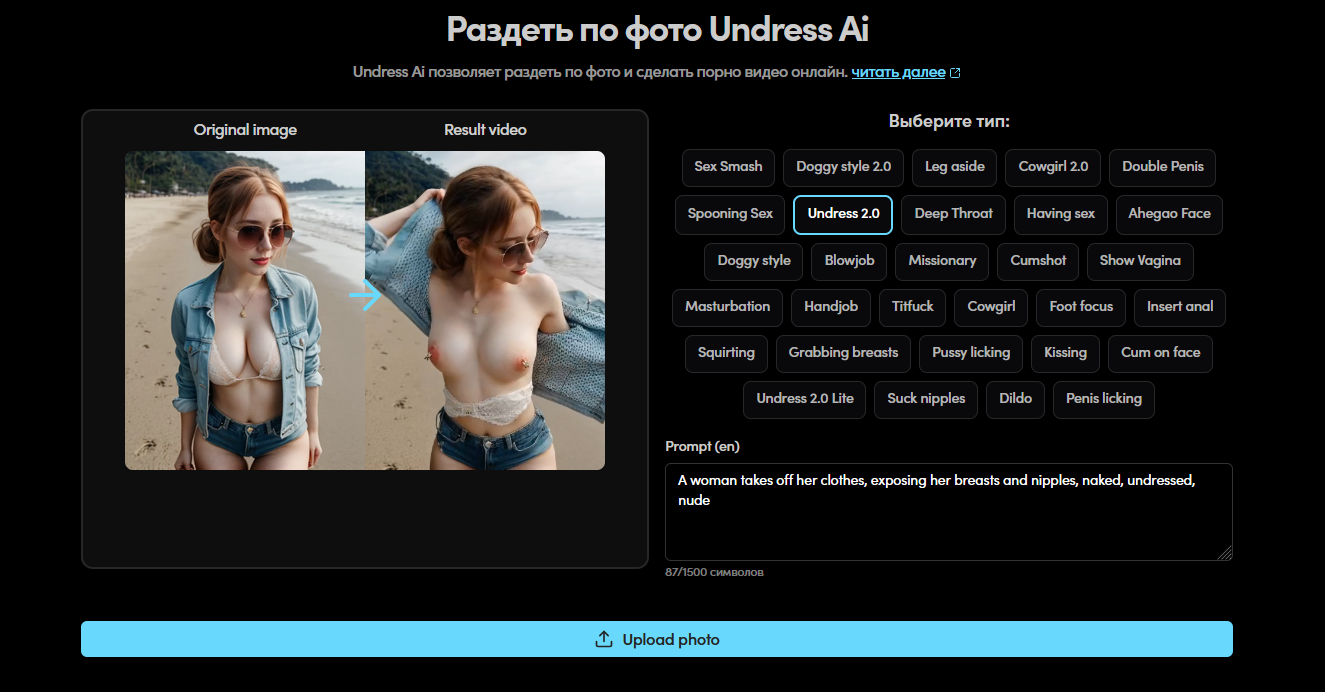
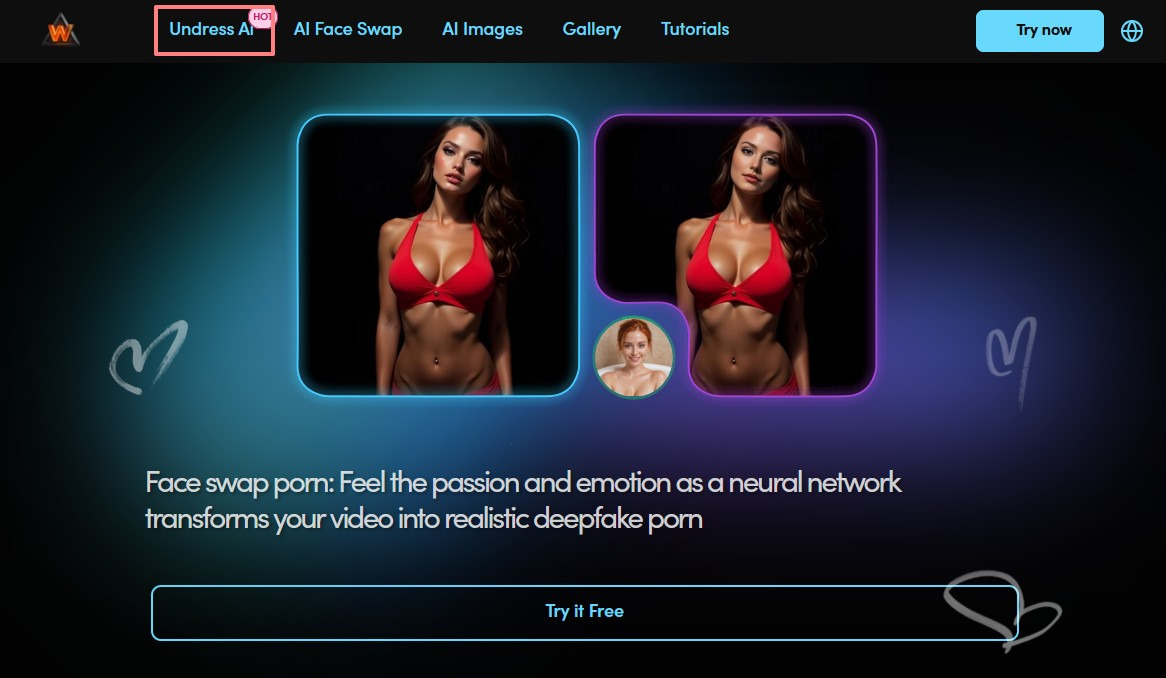
Go to Undress Ai
Upload a photo
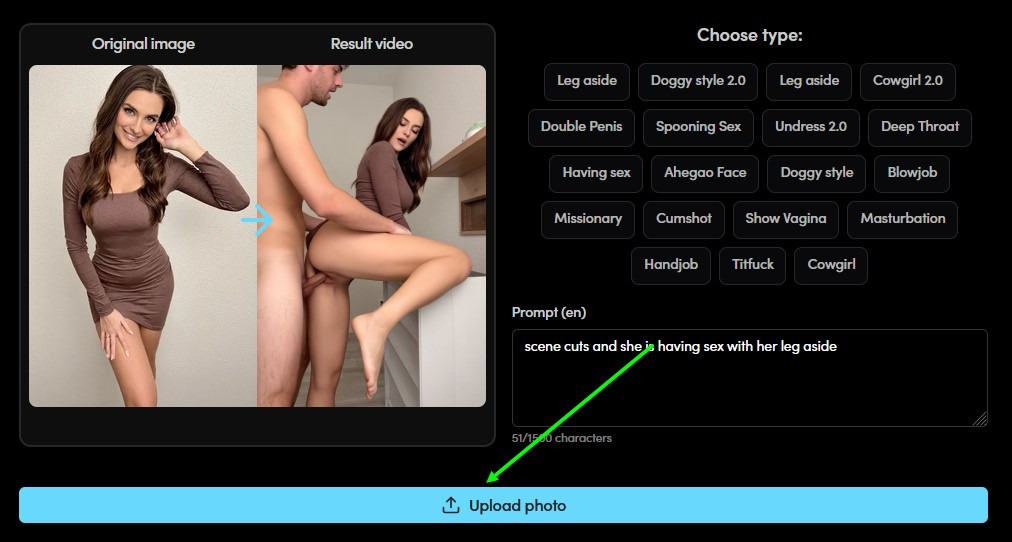
Select the desired action (the result you want to get in the final video) and send it for generation
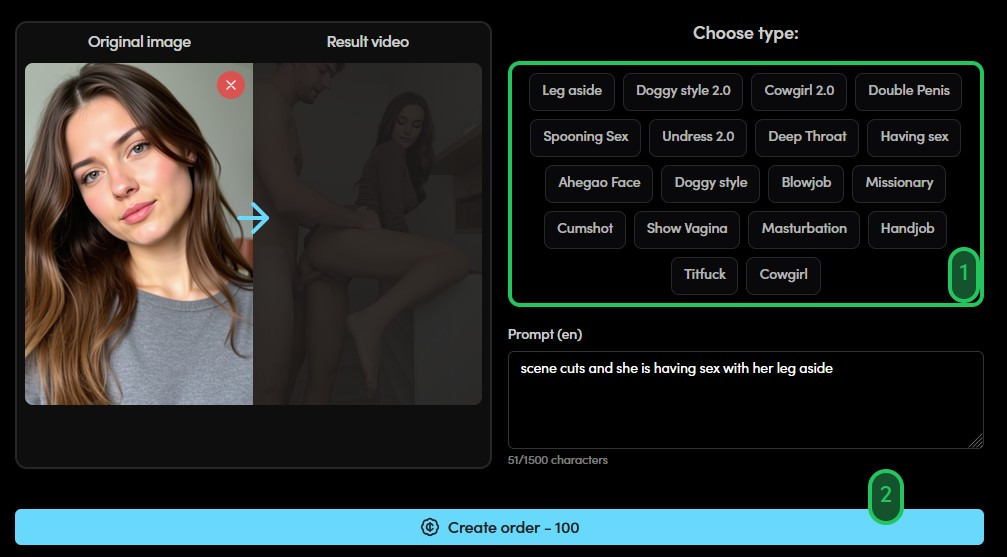
After sending the video for generation, scroll down to check the task

Get the video that can be downloaded or shared
The average time to create an undress video takes less than a minute. Most importantly, during generation, the user doesn't need to interact with complex models directly. All the complex work is hidden behind two or three buttons: you select an action — the application generates a ready video from the photo.
Technologies Undress Aiare becoming part of a broader transformation of digital media, where generative models are changing the very understanding of visual content. When it comes to how to undress a girl in a photo and create an undress ai video, it's important to remember: all such processes belong to the realm of synthetic images, not real visualization.
Generative models do not reveal facts and do not restore hidden details. They create algorithmic versions of what may seem plausible but remains a digital construction. That's exactly why the focus today is not on the question of violating reality, but on the question of perception. How users interact with such images, how aware they are of their artificial nature, and where the boundary between experiment and formed habit lies — all of this becomes key topics of discussion.
Synthetic content can become part of routine digital consumption. Here it's important not to lose a sense of proportion: not to mix artificially created images with real ones, not to form a dependence on visual illusion, and to maintain criticality toward what the neural network shows, capable of quickly undressing in a photo.