Free Undress AI bots in Telegram often come with limitations: low quality, delays, and processing errors. Users are looking for a stable Undress AI neural network that works directly from photos without intermediaries. However, this is impossible to implement fully inside a messenger.
Most users search for “Telegram undress bot” because it seems like the fastest way to get results online without registration. At first glance, the messenger format looks convenient, especially if you don’t want to deal with separate websites, sign-ups, or settings.
The main issue is that Telegram is not an undress AI itself — it only acts as an intermediary between the user and the image processing service. Because of this, the final result depends not only on the AI model, but also on Telegram’s restrictions: failures, unstable connection, quality loss, country limitations, and how the bot is connected to the backend.
That’s why in such tasks it makes more sense to consider not only bots, but also [web-version of the undresser]. When the service works directly through a website, users get more predictable processing, proper access to settings, and fewer technical issues between the request and the neural network.
Why users search for Telegram undress bot and expect instant results
The search usually starts with a simple desire: get the result quickly with minimal effort. The messenger format feels like the shortest path — no need to go to a website, learn the interface, or create an account.
Queries like “Telegram undress bot” create the expectation that you just send a photo and immediately receive the ready result. This builds a simple mental model: there’s a chat, there’s a tool, and there’s instant processing.
This perception is strengthened by the fact that Telegram is already used for many services, so it seems everything will work just as reliably. In practice, however, the scenario works differently, and this is exactly where the gap between expectation and reality appears.
How the Telegram undress bot works
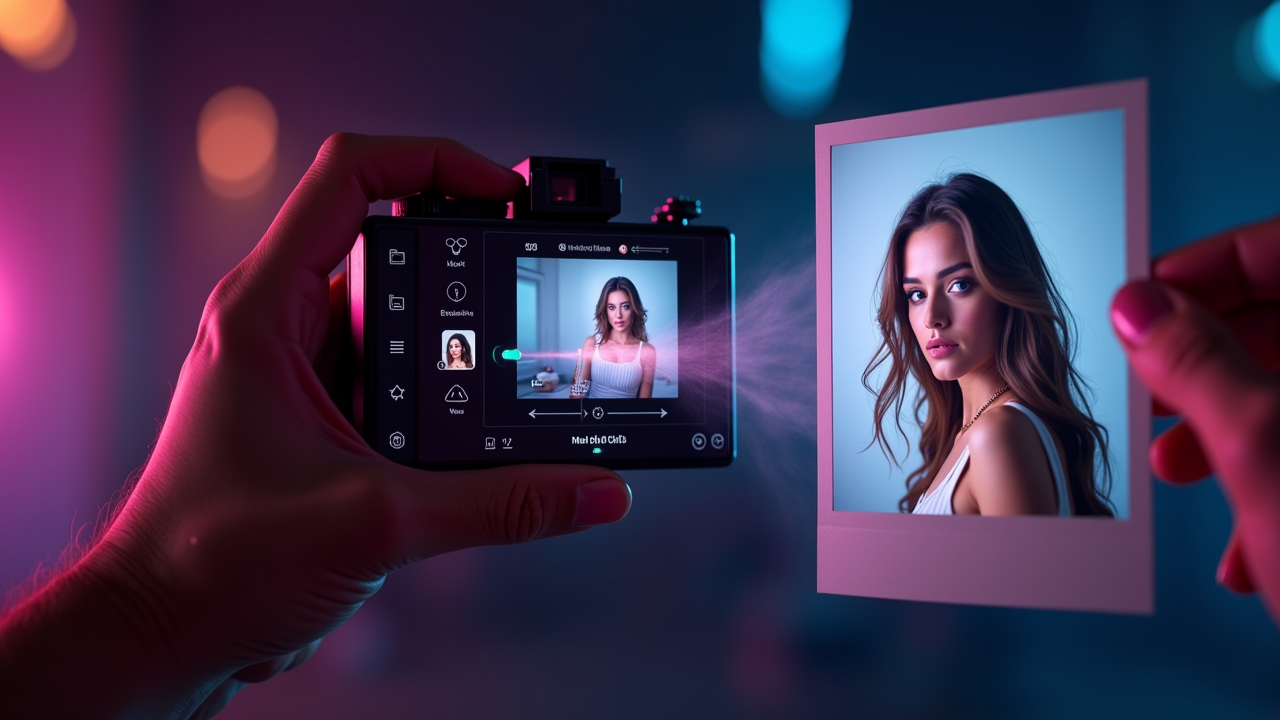
When using a Telegram undress bot, the user does not interact directly with the neural network. First, the photo is sent to the chat, then the bot forwards it to an external service for processing, and only after that the result returns.
In this chain, Telegram acts as an intermediate channel. It does not generate the image itself, but affects data transmission: the photo can be compressed, requests can be delayed, and the connection depends on how the bot is configured and which service it uses.
Because of this, the outcome depends not only on the AI model, but on the entire transmission chain. Even with the same original photo, results can vary significantly due to this extra uncontrollable layer.
How the web version of Undress AI works and how it differs from bots
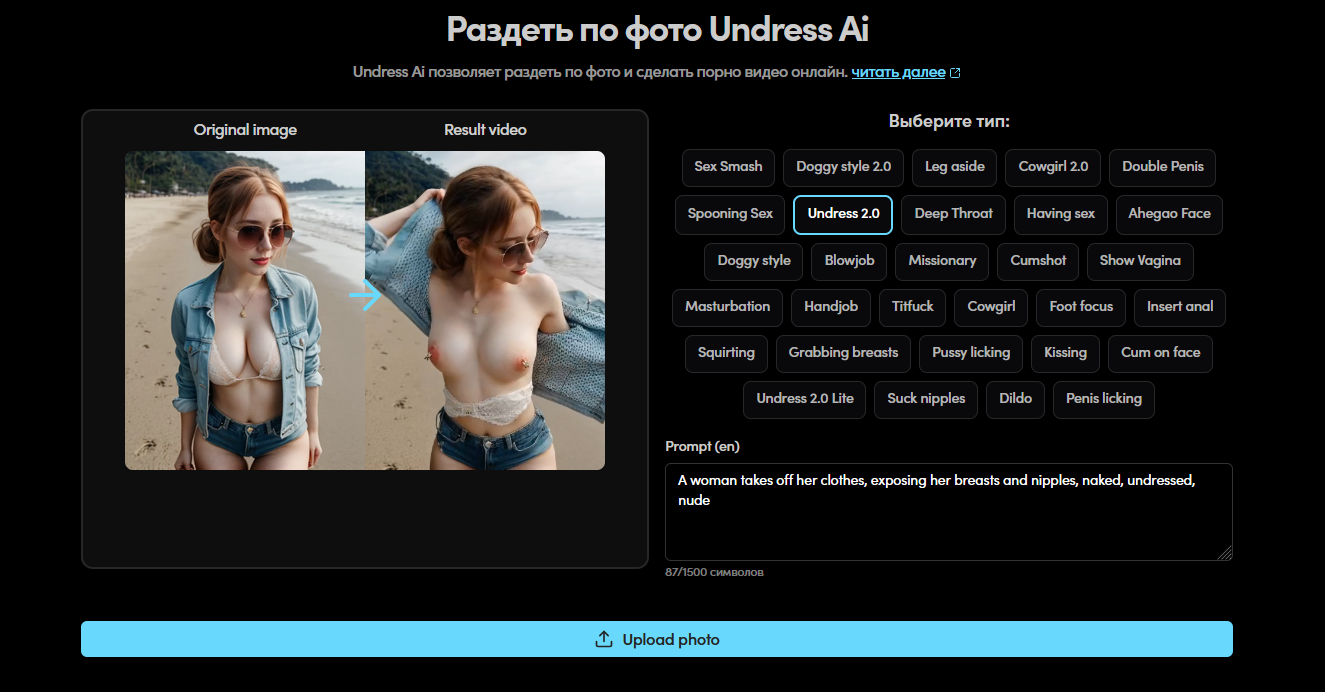
The [web-version of the undresser] works on the same basic principle, but without Telegram’s limitations. The user uploads a photo and receives the result directly from the neural network. Unlike Telegram bots, this platform is originally designed for adult content generation and is not restricted by messenger format.
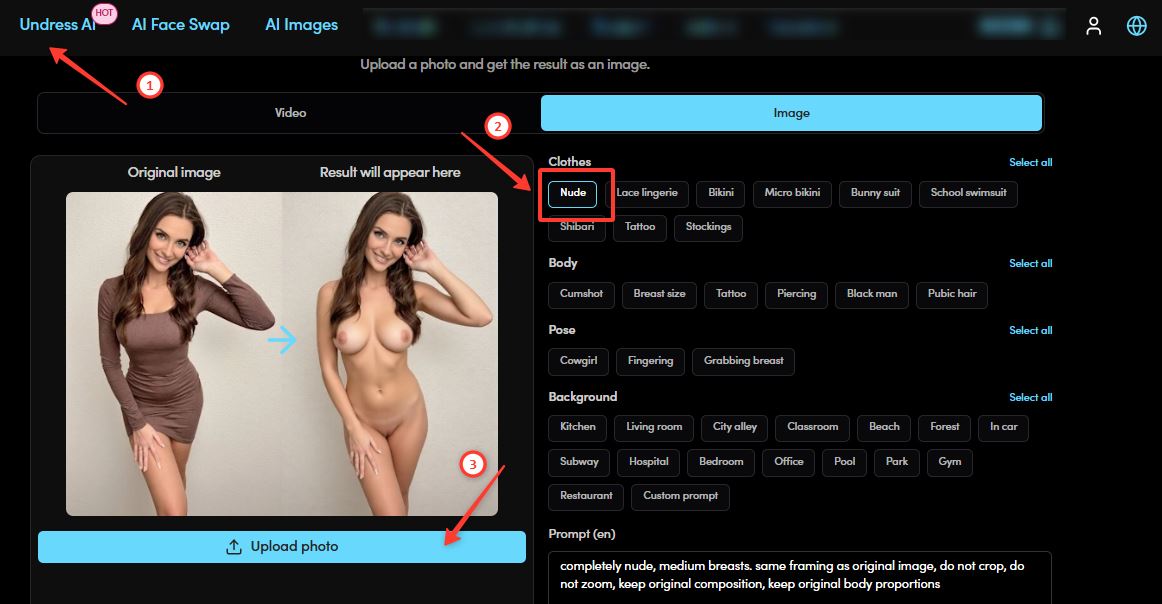
If you are looking for “undress AI without limits” or “photo undress neural network online”, you are actually looking for direct access to the model through a website. This format provides stable quality and full control over the result.
The service is directly integrated with specialized models. Thanks to this, users get ready presets, generation styles, and advanced features that are either missing or unstable in bots. You don’t just send a photo — you manage the result.
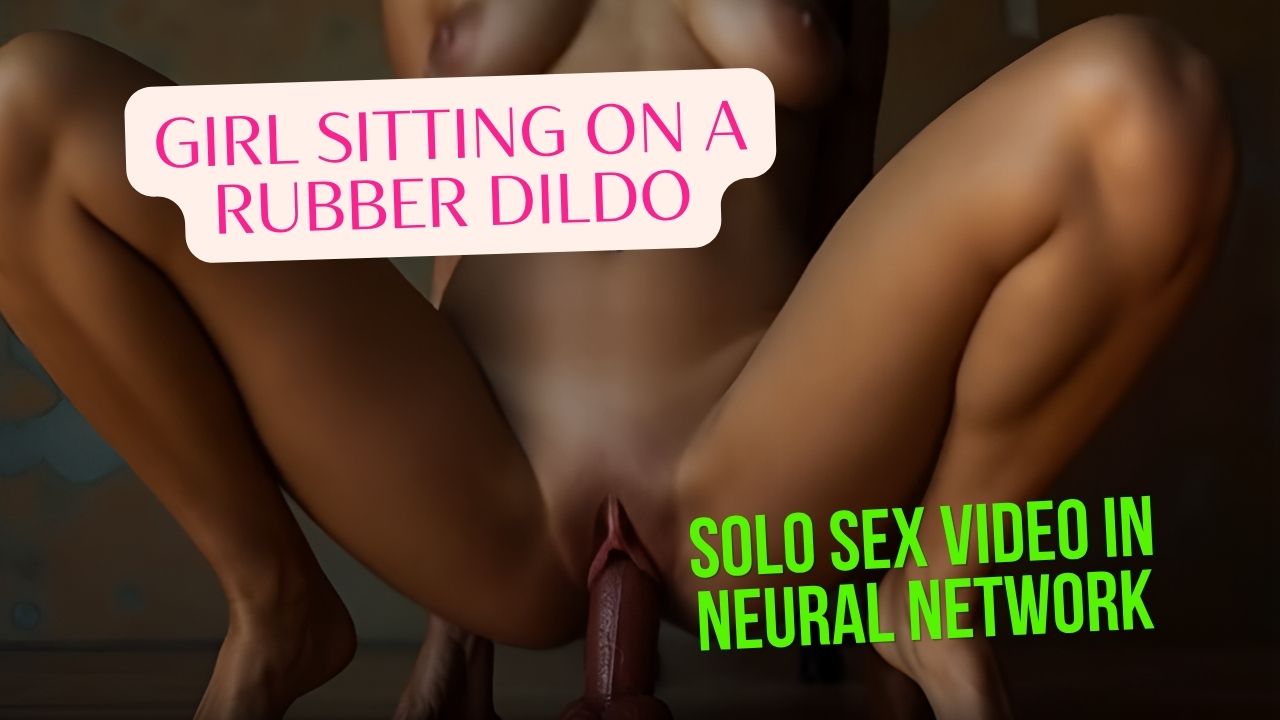
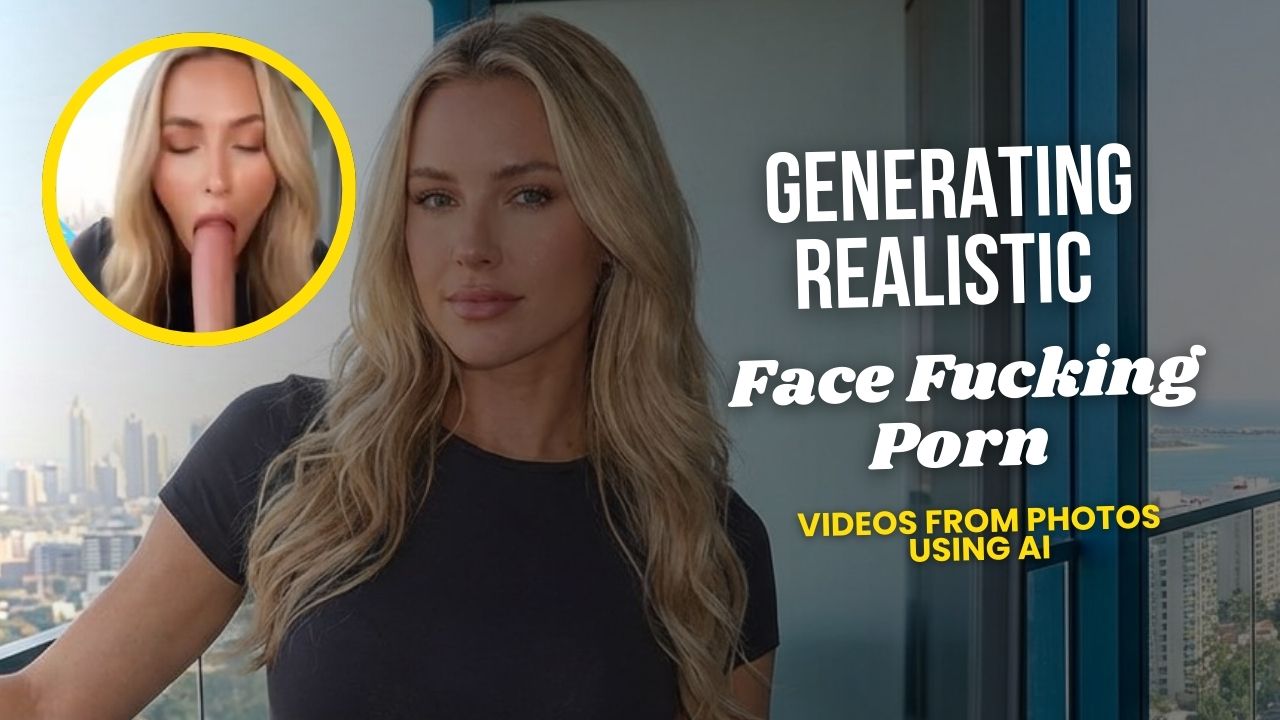
Additional capabilities include changing clothes on the image, generating different styles, or even creating videos based on the original frame. There are also deepfake functions where the result is formed according to the source data and given parameters.
In short, the web version is not just a “way around restrictions” — it is a full-fledged tool optimized specifically for this task.
Comparison: Telegram Bot vs Web Version of Undress AI
Criterion | Telegram Bot | Web Version (Undress AI) |
Work format | Send photo → wait for result | Work through interface with settings |
Result control | None | Choice of parameters and presets |
Quality | Depends on transmission and bot settings | More stable generation |
Features | Limited scenario | Clothing change, styles, video |
Video | Rarely available | Video generation supported |
Work with details | No precise settings | Full control over the result |
Stability | Possible failures and delays | Predictable service operation |
Convenience | Fast start | Requires going to the website |
Example: How generation works in a photo undresser
To see the difference in practice, let’s take a simple scenario. The user uploads a photo to the Undress AI and selects the processing scenario.
At the first stage you get a basic result — the neural network removes clothing and creates a new variant while preserving proportions, lighting, and overall frame structure.
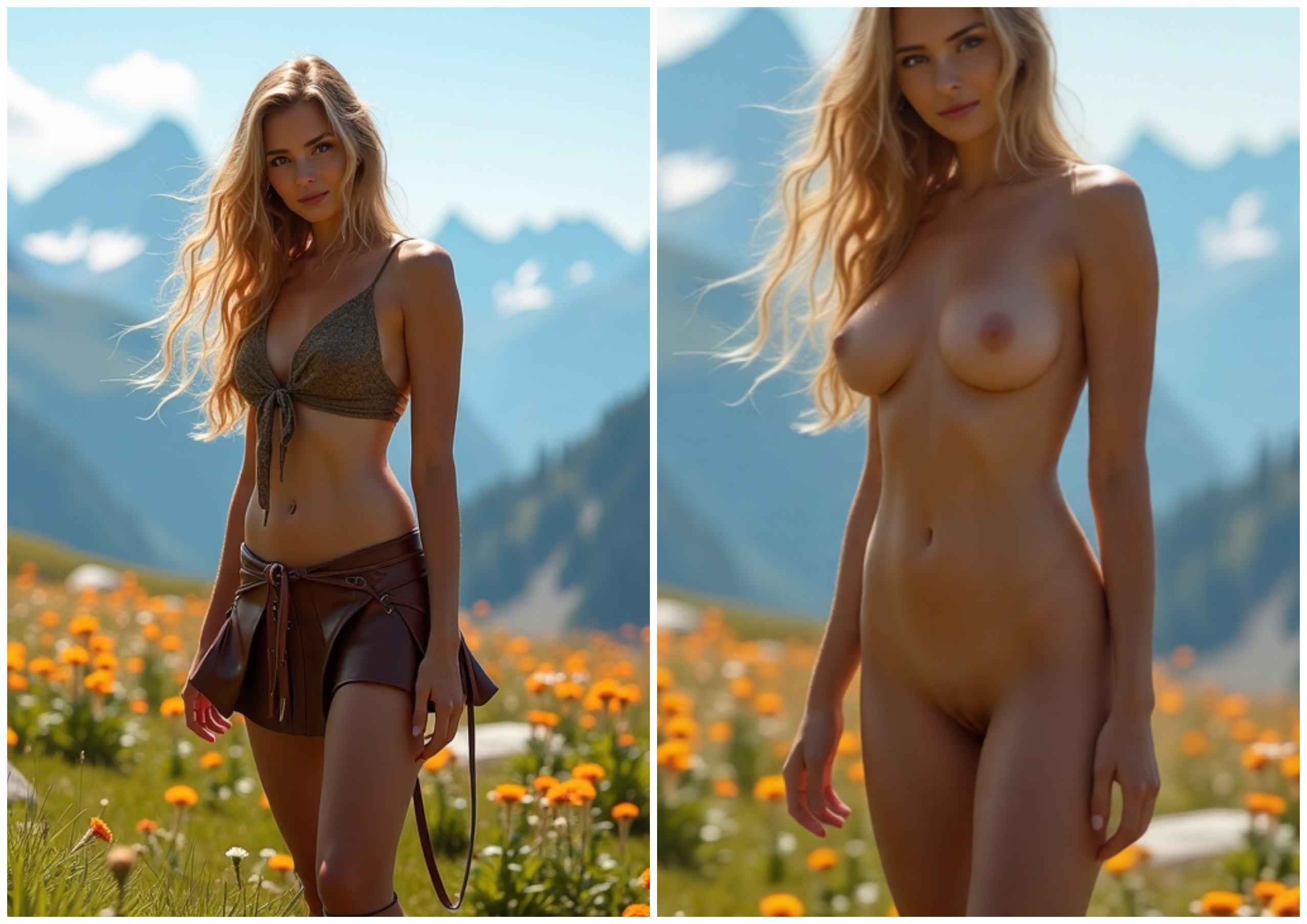
Next, a more flexible option is available: instead of full undressing, you can change the style (for example, replace clothes with lingerie or adjust individual elements). This allows you to get multiple variants from one photo without re-uploading.

A separate format is video generation. In this case the system creates an animation where the girl gradually undresses, using the original photo as the base.
This is already a full sequence of moving frames.
What to choose in the end
If you just want to quickly test a Telegram undress bot, it can be a good starting option. It requires no website visit and gives a result in a couple of clicks.
But when you need a predictable high-quality result and the ability to control the process, it is much better to use the web-version of the undresser. Here you are not limited to one scenario and can work with the image more precisely, choosing the right generation format.
Final recommendation: For a quick test — a bot is enough. For serious use and the best quality — choose web services. The best online undresser without quality loss is a specialized website, not a Telegram bot.